

Morocco Travel Guide 2026
7 steps to planning your 2026 Morocco trip
Planning a Morocco trip can feel overwhelming when there are so many routes, regions and travel styles to choose from, especially if you are travelling as a group.
We have put together this guide to help you plan your travel to Morocco in 2026. If you would rather have the route planned around your dates, interests and pace, our private Morocco holidays and bespoke Morocco tour planning pages are useful starting points.
- Choose the time of year you would like to visit Morocco
- Think about which activities or interests you have for the trip and how you want to travel. If you are a group, this may be wide-ranging but differences can always be accommodated with the diverse choice of opportunities
- What type of accommodation would you like, or maybe a mixture of experiences; camping under the stars, a beautiful boutique Riad or maybe a place with a pool near the coast?
- Who is coming? How many people are in your group and what ages?
- Which areas are you inspired to visit? If the Sahara is a priority, compare our Sahara desert tours from Marrakech before deciding how long to allow for the journey.
- And overall, what would you like the feel of your time in Morocco to be? Total relaxation, cultural absorption, absolute adventure or a mixture?
- With all this information, give us a call or let us call you to talk about your trip and start to put some ideas together

Morocco facts
Area
710,000 square kilometres
Population
Approx. 33 million
Capital
Rabat
Language
Arabic is the official language and Berber will be heard most, along with French. English is also spoken in many places.
Tipping
Tip at your own discretion. Tips can vary but on average around £5-£10 per day is advised.
Time (+/_ GMT)
Same time zone as UK
Electricity
220 Volts & 50 Cycles – standard 2 circular pins (take adapter as per Europe)
Climate
Early mornings will immediately warm up as soon as the sun rises and the days will be warm and hot depending on the season. As soon as the sun sets, the temperature drops radically.
Temperature
Month: Jan Feb March Apr May June
Max °c 23 25 28 34 36 38
Min °c 2 3 7 8 8 9
Month: July Aug Sept Oct Nov Dec
Max °c 38 42 40 38 35 30
Min °c 10 9 8 6 5 3
We recommend:
- Have ready access to enough funds for your stay and your return. Bank transfers can take up to six weeks and if you miss your return flight you may need to buy another ticket.
- Do take care of your belongings at all times. Carry your passport with you in your day bag as sometimes this may be asked for, take a photocopy of it and keep it somewhere safe in your bag; avoid carrying too much cash.
- Minimise hassle; women will attract attention; dress modestly and avoid wearing short skirts and low-necked strappy tops (this includes the desert).
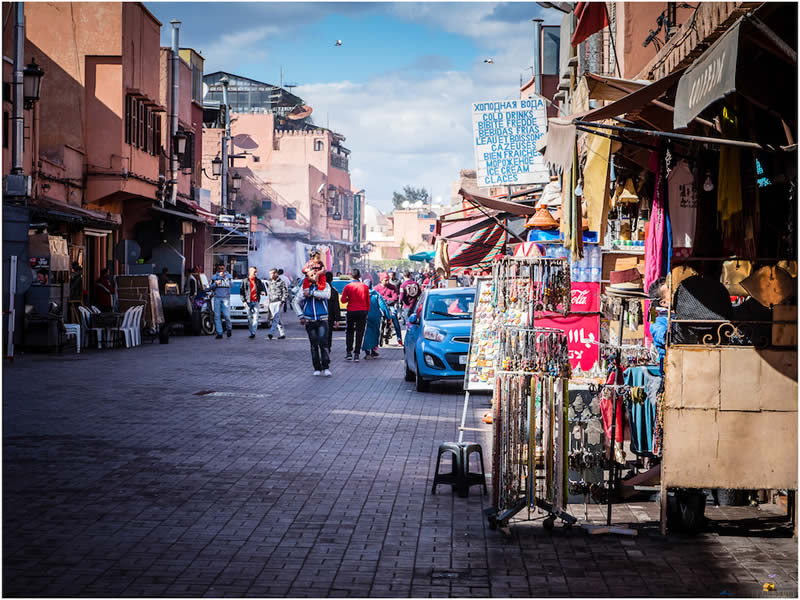
- Do be aware that although shopping is a great experience it can involve a lot of haggling!
Clothing & Items to Bring
- Comfortable clothes for relaxing and walking
- Walking shoes & Flip Flops/Walking Sandals
- Long, cool cotton clothes to cover you for the evenings
- A fleece if travelling in the cooler months for the evenings
- Sun cream & a hat
- Swimming Costume
- A Head Torch can be useful!
- A Camera
- Small Day Rucksack
- Emergency phone numbers and any important medical information
- A photocopy of your Passport
- Dioralyte – take at the first sign of dehydration
- Chargers & Plug Adaptors
Your Tour
You will be picked up from your hotel on the morning of the Tour by a Moroccan Journeys driver in a private 4×4 at 8:30 am unless otherwise informed. Where access to cars is limited, your driver will contact the hotel to arrange for them to bring you to a convenient place. If you have any difficulties before the Tour and have not arrived at your pick up point, please call us on one of the numbers below. We will contact you prior to the Tour if there are any changes to the pick up time and we ask you to try to be prompt to ensure you get the most out of your journey. You can ask your driver for any information you need and about the local area. He will fully escort you to your accommodation and discuss areas to visit en route.
Entry Requirements
British & European nationals do not need a visa to enter Morocco for the purpose of tourism for up to 3 months. When entering the country, make sure your passport is stamped. Some tourists have experienced difficulties leaving the country because their passport bears no entry stamp.
Telephone
The international direct dialling code for Morocco is +212. Please check with your mobile phone provider if you are able to have coverage in Morocco.
Photography
Please bring batteries with you. There is electricity at the camps for re-charging.
Currency regulations
The national currency is the Dirham, which is divided into 100 centimes. For up to date currency exchange, go to www.xe.com. You are able to get MAD at the airport when you arrive or when you are in Marrakech.
Alcohol
Some hotels in Morocco do not serve alcohol, so if you would like a drink with your meal please let us know. The Desert Camps have a limited supply of alcohol and it is also possible to buy this and take it with you.
Gifts and souvenirs
For centuries, Moroccan crafts have been world-famous for their variety and quality. The best thing to remember is that hard bargaining is essential!
Vaccination and health
Please consult your GP regarding vaccinations. Most people who travel to Morocco do not take additional vaccinations but advice varies. This is entirely your choice. Malaria is not normally present in Morocco, however you should ensure good bite avoidance by covering up with clothing such as long sleeves and long trousers especially after sunset and using insect repellents on exposed skin.
Hospitals/pharmacies
Hospitals exist in all major cities and pharmacies can be found in smaller towns.
Water
Water is not safe to drink from the tap, rivers or creeks. Water will be provided for you whilst you are on the trip. Make sure you ask for ‘mineral’ water.
Geography
Morocco is one of Africa’s most geographically varied countries, with four main mountain ranges: the Rif, Middle Atlas, High Atlas and Anti Atlas. In the south, the country opens into the Sahara Desert. This variety is why many tailor-made Morocco holidays combine cities, mountains, coast and desert in one route.
Culture/Customs
A fascinating mixture of Arab, African, Islamic, Berber and European cultures, customs and beliefs.

If you are planning a trip to Morocco, this guide brings together practical advice on weather, packing, money, transport, culture and safety. It is designed to help you make sensible decisions before choosing your route, whether you are interested in cities, the High Atlas, the coast or the Sahara.
Use this page as a planning guide before comparing tour options. For a deeper look at the Red City, see our full Marrakech Travel Guide.
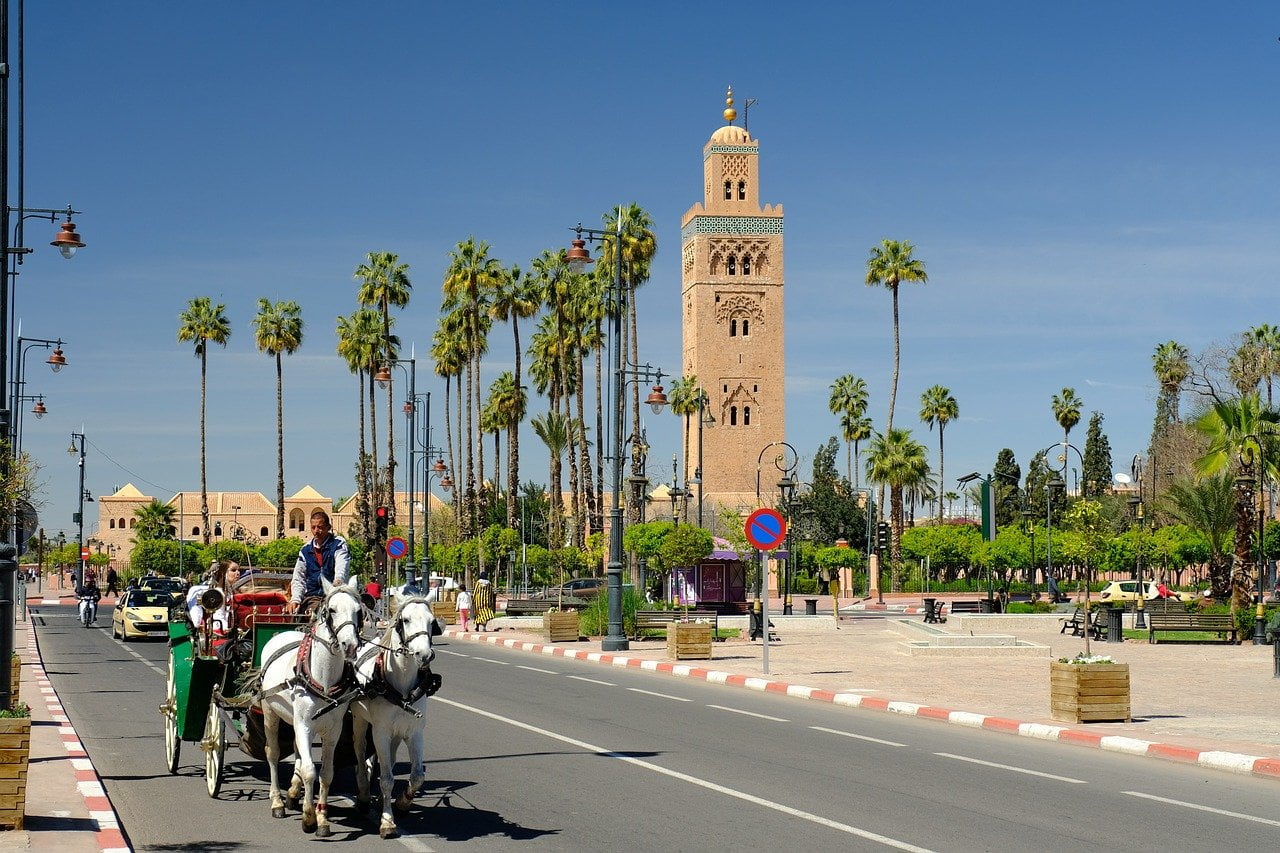 Marrakech’s charming blend of history and coast – a great starting point for your Morocco adventure.
1) What is the best time to visit Morocco by region?
Morocco, Morocco – this country’s weather is as diverse as its landscapes! Not everywhere is scorching hot year-round. Picture the mild Atlantic breezes, the hot, hot interior summers with those cooler evenings that surprise you, the chilly High Atlas nights where you huddle by a fire, and the Sahara’s freezing winter darkness under a blanket of stars. On my last trip, I learned the hard way – packing for one region doesn’t cut it for all. Let’s break down the best time to visit Morocco by area, so you can plan around your dreams, whether it’s beach lounging or desert exploring.
Climate by region
| Region | Spring (Mar–May) | Summer (Jun–Aug) | Autumn (Sep–Nov) | Winter (Dec–Feb) |
|---|---|---|---|---|
| Atlantic coast (Essaouira, Agadir, Oualidia) | Mild and bright; good beach conditions – perfect for kitesurfing! | Warm with sea breezes; foggy mornings possible – refreshing escapes from heat. | Mild and sunny – ideal for relaxed walks. | Cool but pleasant – great for off-season serenity. |
| Imperial cities (Marrakech, Fes, Meknes) | Warm days, cool nights – blooming gardens everywhere. | Very hot; dry heat – siestas are a must! | Warm and comfortable – fewer crowds, more magic. | Cool to cold nights; occasional showers – cosy riad stays. |
| High Atlas (Imlil, Toubkal, Ouirgane) | Unsettled at altitude; snow lingers – wildflowers in bloom. | Clear, warm days; cool nights – prime trekking time. | Settled; ideal for trekking – crisp air and views. | Cold; snow common above ~2,000 m – winter wonderland hikes. |
| Sahara (Merzouga, Erg Chegaga) | Pleasant days; cold nights – camel rides without the scorch. | Extremely hot days – adventure for the bold! | Warm; sandstorms possible – dramatic sunsets. | Sunny days; very cold nights – starry skies like no other. |
I once visited the Sahara in winter – those cold, cold nights had me bundling up, but the clear skies made for the best stargazing of my life. Morocco’s weather varies so much; it’s like several countries in one!
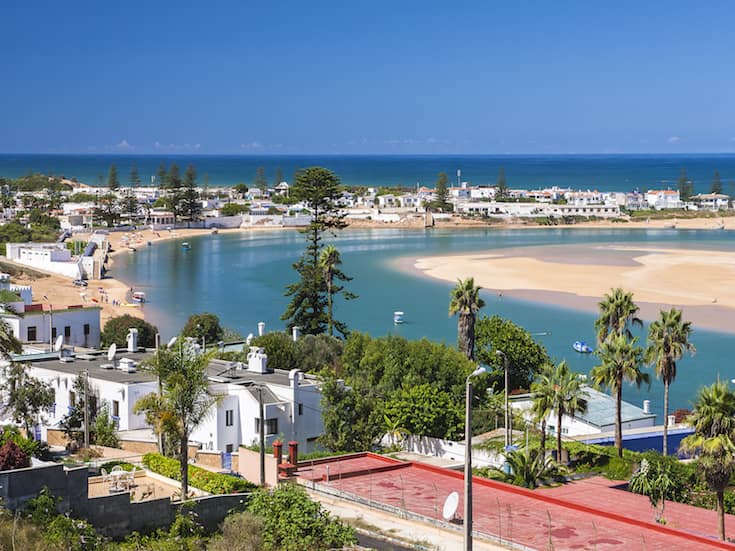
Overlooking the Beach at Essaouira Luxury Resort in Morocco
Trip ideas by season
Spring and autumn are my favourites for mixing cities and deserts – the temperatures are just right. Summer? Head to the coast to beat the heat. Winter brings crisp days perfect for cultural dives.
- Spring/Autumn: City and desert circuits work well. See our Luxury Marrakech & Sahara Tour or the classic Marrakech–Merzouga route. These are great for best Sahara Desert tours from Marrakech.
- Summer: Choose the coast – Essaouira & Oualidia, Atlantic Beach or Atlantic Surf – and cool mountain air on the Atlas Mountains Day Trip.
- Winter: Clear city days, snowy peaks and crisp desert skies. Consider Erg Chigaga Luxury Desert Camp or a tailored Luxury Desert Tour.
Pro tip: Avoid Ramadan if you’re not prepared for adjusted hours – but if you are, it’s a cultural immersion like no other!
2) What should I pack for a trip to Morocco?
Packing for Morocco? Layers, layers, layers! The weather swings wildly, from hot days to chilly nights. I remember forgetting my scarf on a desert trip – big mistake, as it doubled as sun protection and dust shield. Go for lightweight, breathable fabrics during the day, a cosy mid-layer for evenings, and something windproof for coasts and mountains. Modest dress shows respect in rural spots and conservative areas – think covered shoulders and knees. Comfortable closed-toe shoes are essential for those cobbled streets and sandy paths.

Morocco Travel Essentials – a visual guide to what to pack for your journey.
Packing checklist
Here’s my tried-and-tested Morocco packing list. I’ve expanded it with tips from real trips – no fluff, just what you’ll actually use.
| Category | Items and tips |
|---|---|
| Clothing | Breathable tops, light trousers or long skirts, light jumper or fleece, packable waterproof, scarf or bandana for sun and dust – opt for quick-dry fabrics to handle sweat and spills. |
| Footwear | Walking shoes or trainers for city strolls, sandals for beaches, thicker socks for desert nights – break them in before you go to avoid blisters. |
| Sun & health | High-SPF sunscreen (reef-safe for eco-friendliness), sunglasses, hat, insect repellent, basic first aid kit, personal medication – don’t skimp on hydration tabs. |
| Tech & admin | Passport, travel insurance docs, power bank, EU two-pin adapter (Type C/E), offline maps app, copies of bookings – a waterproof phone case is a lifesaver in dusty areas. |
| Optional for adventures | Swimwear for riads or coast, compact binoculars for wildlife, sleeping liner for desert camps, reusable water bottle – eco-friendly choices like bamboo toothbrushes show respect for Morocco’s environment. |
Heading into the dunes? We arrange kit and support on Sahara treks and walking holidays. For a premium tented experience, see Erg Chigaga Luxury Desert Camp with private camp options, tent suites & rates and dining under the stars.

Packing smart for the Atlas – layers are your best friend!
- Start with versatile basics.
- Add weather-specific items.
- Don’t forget cultural must-haves like scarves.
- Test everything before departure.
What’s your top packing hack for Morocco? Share in the comments below – let’s help each other out!
3) What are typical costs and money tips in Morocco?
Handling money in Morocco? It’s straightforward once you get the hang of it. The dirham is king, and while cards are gaining ground, cash rules in souks and small spots. I once tried bargaining without small notes – lesson learned, always break big bills at ATMs! Keep things polite, and remember, haggling is part of the fun.
- Currency: Moroccan Dirham (MAD). Withdraw from ATMs or exchange on arrival. Keep small notes for taxis, tips and souks – they’re gold in markets.
- Cards: Common in hotels and larger restaurants/shops; smaller traders often prefer cash – have a mix ready.
- Tipping: Rounding up is normal; 5–10% is typical in sit-down restaurants where service is good – it’s a way to say ‘shukran’.
- Haggling: Expected in markets. Keep it polite and good-humoured – start at half the asking price and meet in the middle.

Haggling in a Marrakech souk – part of the Morocco travel adventure!
Indicative small costs (city averages)
Costs can vary, but here’s a rough guide based on my recent visits. Morocco offers great value – a tagine meal beats many European prices!
| Item | Typical price (MAD) |
|---|---|
| Mint tea | 10–20 |
| Espresso/coffee | 15–25 |
| Bottle of water (1.5L) | 6–10 |
| Museum/monument entry | 20–70 |
| Petit taxi short hop | 10–25 |
| Tagine meal for one | 50–100 |
For more on budgeting, check the Morocco holidays page.
4) How to get around Morocco?
Navigating Morocco is an adventure in itself! Trains are comfy and efficient for major routes, coaches fill the gaps, driving offers freedom (but watch those mountain roads), and taxis are handy for short hops. I love the train from Casablanca to Marrakech – scenic and relaxing. Here’s how to get around Morocco without a hitch.

Cruising by train – a smooth way to see Morocco’s landscapes.
Trains (ONCF): Reliable, comfortable and good value. A high-speed service links Tangier, Rabat and Casablanca. InterCity trains continue to Marrakech. Buy online at ONCF website or at stations – first class is worth the splurge for longer trips.
Coaches: CTM and Supratours reach areas beyond the railway. They are air-conditioned and practical for longer hops such as Marrakech–Essaouira or Marrakech–Ouarzazate – book ahead in peak season.
Driving: Motorways and main roads are good. In rural areas, watch for pedestrians and animals. Avoid night driving off main routes – consider a driver for peace of mind.
Taxis: Petit taxis are for short city journeys (often metered). Grand taxis operate intercity or private hires – agree the fare if no meter, and share with locals for fun stories.
Approximate travel times
| Route | Train | Coach/Car |
|---|---|---|
| Casablanca ↔ Rabat | 1–1.25 h | 1.5–2 h |
| Casablanca ↔ Marrakech | 2.5–3.5 h (IC) | 3–3.5 h |
| Tangier ↔ Casablanca | about 2–2.5 h (high-speed) | 3.5–4.5 h |
| Marrakech ↔ Essaouira | — | 2.5–3 h |
| Marrakech ↔ Ouarzazate | — | 3.5–4.5 h (via Tizi n’Tichka) |
| Marrakech ↔ Merzouga (via Dades/Todra) | — | 9–10 h total (usually split 2–3 days on tour) |
If you prefer day trips from a single base, our Marrakech Day Trips include the Essaouira coast, Atlas Mountains, Ait Ben Haddou, Ouzoud Falls and Lake Takerkoust.
5) What are Morocco culture and etiquette tips?
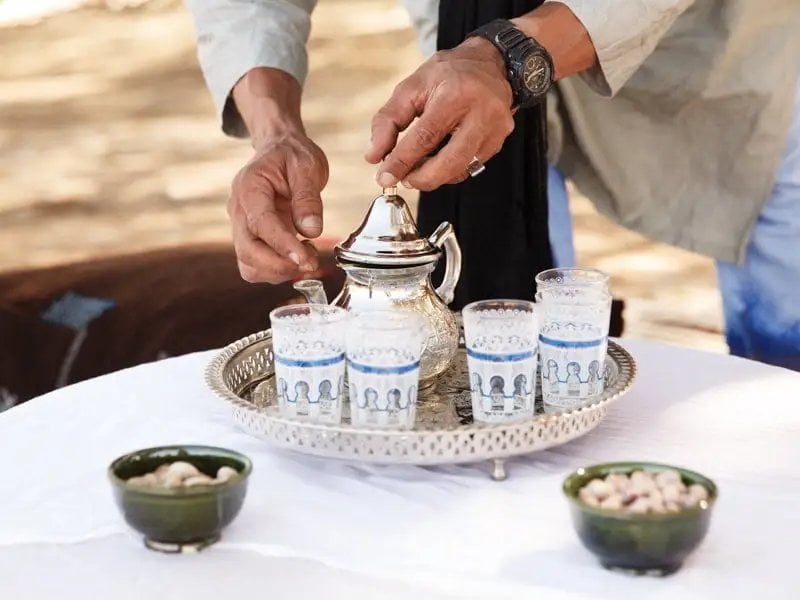
Morocco’s culture is rich and welcoming – a blend of Berber, Arab, and European influences that makes every interaction memorable. I fell in love with the hospitality; locals often invite you for tea! But respect is key. Here’s some Morocco culture and etiquette advice to help you blend in and show appreciation.
- Greetings: A friendly “salaam alaikum” (peace be upon you) is appreciated – respond with “wa alaikum salaam”.
- Dress sense: Cities are mixed; modest clothing is sensible in rural areas and conservative neighbourhoods – it’s about respect, not restriction.
- Religious sites: Most active mosques are not open to non-Muslims; a few offer guided visits – always remove shoes and dress appropriately.
- Ramadan: Be discreet with daytime eating and drinking in public; opening hours may shift – join an iftar for a special experience.
- Photography: Ask before photographing people, especially in markets – a smile and gesture go far.
- Haggling: Keep it polite; walking away is part of the process – but with humour, it’s enjoyable for all.
Marrakech vs Fes: City comparison
Can’t decide between these imperial gems? Here’s a quick table to help – both are Morocco’s hidden gems, but with different vibes.
| Aspect | Marrakech | Fes |
|---|---|---|
| Vibe | Vibrant, lively souks and nightlife | Historic, intricate medina and crafts |
| Attractions | Jemaa el-Fnaa, gardens, palaces | Medina labyrinth, tanneries, mosques |
| Costs | Higher due to tourism | More affordable, authentic feel |
| Best for | First-timers, luxury seekers | History buffs, cultural deep dives |
Whichever you choose, you’ll adore Morocco’s cultural depth.
6) What are health and safety tips for Morocco?
Staying healthy in Morocco is mostly common sense – I’ve had smooth trips by following these tips. The country is safe for travellers, but like anywhere, stay aware. Here’s what to know.

Staying sun-safe in the Sahara – key for enjoyable travels.
- Vaccinations and prep: Check routine jabs and speak to a clinician well before travel – hepatitis A and typhoid are often recommended.
- Sun and hydration: Use high-SPF sunscreen, cover up and drink plenty of water – dehydration sneaks up in the heat.
- Altitude: Parts of the High Atlas are above 2,000 m. Ascend gradually and rest if you feel unwell – I sipped herbal tea to ease it.
- Animals: Avoid contact with strays; seek advice after bites or scratches – rabies is rare but present.
- Insurance: Ensure cover for trekking, desert activities, quad biking or horse riding. See our Horse-Riding Tour and Sahara Horse Trekking.
Before you travel, always check official sources like the UK FCDO Morocco page.
7) What are connectivity and practical tips for Morocco?
Staying connected in Morocco is easier than you think – Wi-Fi is widespread, and SIMs are cheap. I’ve navigated with offline maps and chatted with locals via apps. Here’s the lowdown.

- SIMs & eSIMs: Maroc Telecom, Orange and Inwi sell prepaid services at airports and in town; passport usually required for registration – great for data on the go.
- Wi-Fi: Common in riads, hotels and cafés; speeds vary – download offline content just in case.
- Power: 220V; bring a two-pin European adapter (Type C/E) – universal ones are handy.
- Time: Morocco operates GMT+1 most of the year; confirm local time during Ramadan adjustments if you have transport booked.
8) What is responsible travel in Morocco?
Travelling responsibly in Morocco means leaving a positive footprint – or none at all in those delicate dunes. I’ve seen how small actions help preserve this beautiful land. Focus on eco-friendly choices for personalised Moroccan journeys.

- Carry a reusable bottle and refill from larger containers where possible – reduce plastic in deserts.
- Stick to marked tracks in the dunes; desert habitats are delicate – those Sahara ecosystems need protection.
- Shop local and consider cooperatives; pay fair prices – support Berber artisans directly.
- Ask before photographing people, especially artisans and stallholders – respect privacy.
- Choose eco-riads and tours that give back – like our sustainable options.
Morocco’s hidden gems stay hidden with mindful travel.
9) How to plan your Morocco trip and how we can help
Planning a Morocco trip is easier when the route is shaped around your dates, travel pace and main interests. If you are travelling with children, it also helps to allow for shorter travel days, flexible meal times and a balance of sightseeing and rest. Our family holiday in Morocco guide shares practical ideas on where to go, how to pace your route, and what to consider before you book accommodation and transport.
Read recent testimonials, browse our private Morocco holidays, compare Sahara tours in Morocco, or send us your ideas through the enquiry form.
Indicative daily budgets (per person)
Budgets vary, but here’s a guide – Morocco suits all wallets.
- Budget: ~MAD 500–900 — simple riads/guesthouses, public transport, street food – authentic and affordable.
- Mid-range: ~MAD 1,200–2,500 — character riads, private driver on longer days, guided experiences – balanced comfort.
- Premium: MAD 3,000+ — upscale riads/desert camps, private guiding, special experiences – luxury all the way.
 Written by Moroccan Journeys
Rebecca grew up in Africa and has spent her life travelling and working in the UK and around the world in both the corporate and personal development fields. She is the co-founder of Moroccan Journeys, alongside Mohamed Elhaoissi, and resides in both the UK and Morocco. She believes in the conscious management of business and the importance of personal growth. Rebecca is also a Reiki Master Teacher and runs Intensive Reiki Journeys in the Sahara Desert. She spends her free time exploring the untouched parts of Morocco to ensure Moroccan Journeys is eclectic and unique in its offering.
Frequently Asked Questions
Marrakech is a captivating city renowned for its unique souvenirs. Leather products, including bags, wallets, shoes, jackets, and belts, are highly recommended purchases. Traditional Moroccan pottery, ceramics, and glassware are also popular choices, showcasing intricate patterns that reflect Marrakech’s culture. Textiles, ranging from carpets and kilims to cushion covers and bedspreads, offer a vibrant and diverse selection. Additionally, indulging in delicious traditional cuisine by acquiring dried fruit, nuts, or sweet pastries is a delightful way to bring the flavors of Marrakech home. With an array of exceptional items to choose from, you’ll discover a special keepsake that will evoke cherished memories of your trip.
When traveling to Morocco, particularly Marrakech, it’s essential for tourists to be mindful of the expected dress codes to demonstrate respect for local customs and avoid causing offense. Morocco, being an Islamic country, places importance on modesty and etiquette. Visitors should remember that attire considered acceptable at home might be deemed inappropriate in Morocco.
It is recommended for tourists to wear loose-fitting garments that cover the arms and legs as much as possible. While shorts and skirts that exceed knee length are acceptable, they should not be excessively tight. Tank tops, sleeveless shirts and blouses, low-cut tops, trousers with ankle splits, mini-skirts, and dresses above the knee should be avoided. Women should also refrain from wearing shorts, trousers, or jeans as they are considered inappropriate in Morocco.
Although headscarves and long robes are considered appropriate attire for women in Morocco, they are not mandatory. However, in some religious sites, wearing a headscarf as a sign of respect may be expected. Morocco is generally tolerant towards tourists, and there is flexibility regarding the dress code in Marrakech and other popular tourist destinations. Nevertheless, it is advisable for visitors to exercise caution and choose attire that aligns with local customs while visiting Morocco.
Mosquitoes are prevalent in Morocco and can bite throughout the year. To prevent mosquito bites and reduce the risk of mosquito-borne diseases like malaria or dengue fever, travellers should use mosquito repellent. Look for repellents containing DEET, a scientifically proven ingredient for effective mosquito repellency. Additionally, wearing light-colored clothing and avoiding areas with standing water, especially during dawn and dusk, can help minimise exposure to mosquitoes. Stay informed about the current mosquito activity in Morocco by consulting your local health authority for the latest information.
When visiting Morocco, it is common and suitable to wear pants and a shirt, as most locals dress this way. In rural areas, consider wearing long pants and a long-sleeved shirt to protect yourself from the sun and wind.
Pack essential items like a hat, sunglasses, sunscreen, and insect repellent. Comfortable shoes are a must for extensive walking. Additionally, consider these handy items:
- – Shawl or scarf: Useful as a wrap, headscarf, or sun shield.
- – Comfortable shoes and sandals: Have a pair for all-day wear and comfortable flip-flops or sandals.
- – Loose-fitting clothing: Opt for lightweight, breathable fabrics to stay cool. Avoid tight clothing and choose tops with short sleeves or sleeveless options.
Adapt your packing to the season, layering in winter and wearing light outfits in summer. For formal occasions or upscale dining, dress accordingly with a dress or suit. Enjoy your trip to Morocco!
While Moroccans generally consume tap water without issues, there is a small inherent risk of illness. The chlorination process effectively eliminates most disease-causing germs and viruses; however, some individuals prefer to purify their water or opt for bottled water for added safety. It is crucial to inquire in advance and consult with your hotel regarding their recommendations.
Travellers venturing into remote areas of Morocco are advised to use bottled water due to potential bacterial presence. Moreover, boiling tap water is a common practice among many Moroccans as an extra precautionary measure. If you choose to drink tap water, ensure it is boiled first. It is essential to refrain from consuming water from rivers and streams at all times due to contamination risks.
Alcohol consumption in Morocco is permitted within licensed venues, such as hotels and restaurants. However, it is important to note that drinking alcohol in public places and transporting it across the border is prohibited by law. Morocco being a Muslim country, these restrictions are in place to adhere to local customs and regulations.
As of 30 September 2022, Morocco no longer requires a vaccine pass or PCR test for entry into the country. However, travellers are still required to complete a passenger health form to provide information and assist with monitoring within Morocco’s borders. It is important to note that wearing a face mask is mandatory in public spaces, and there may be additional local restrictions that vary across different regions of Morocco.
Morocco Summer & Winter Holidays

Private Morocco Holidays
Tailor-made routes across Morocco
Our private Morocco holidays can combine cities, the High Atlas, the Sahara, the coast and rural stays in one planned route. This is the best starting point if you want help choosing where to go, how long to allow and which travel style suits your dates.

Bespoke Travel Morocco
Custom Morocco tour planning
If you already have specific interests, accommodation preferences or a special occasion in mind, our bespoke travel planning service can shape a private itinerary around your pace, group size and preferred experiences.