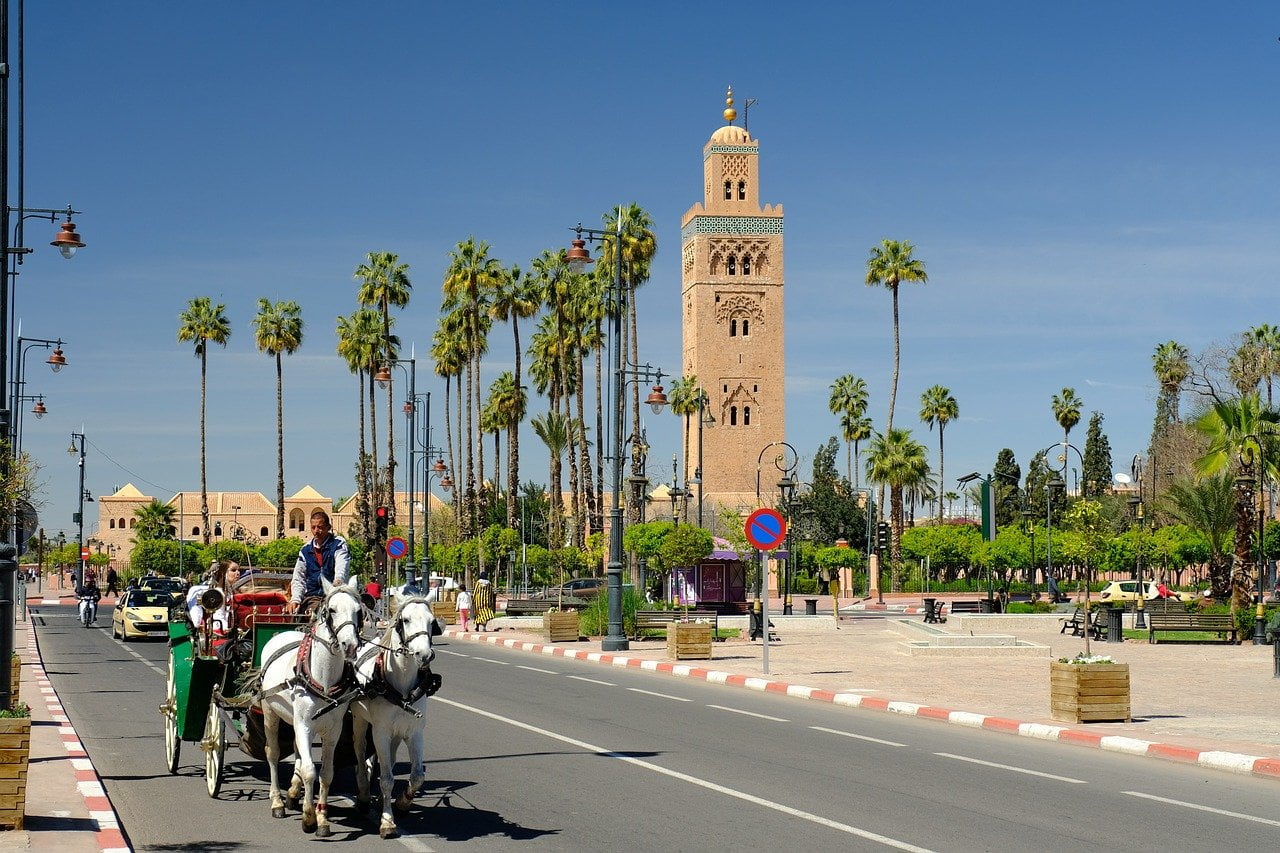

Morocco Weather Guide: Marrakech Forecast & Monthly Averages
Morocco’s weather changes a lot between the coast, Marrakech, the Atlas Mountains and the Sahara. This page gives you a live Marrakech forecast, plus clear monthly and seasonal guidance for planning a trip anywhere in Morocco.
Quick answers for planning
- Warmest winter sun: The Atlantic coast (especially around Agadir) tends to stay milder than inland areas.
- Hottest summer heat: Marrakech and inland regions can be very hot in July and August, with strong afternoon sun.
- Biggest temperature drop at night: Desert areas can feel warm in the day but cold after sunset, even outside mid-winter.
- Cold and snow risk: The Atlas Mountains can be cold in winter, with snow at higher elevations.
- Most useful approach: Use the live forecast for short-term decisions, and the monthly guidance below for choosing dates.
If you are planning a full itinerary, our Morocco travel guide also covers costs, getting around, culture and practicalities.
Live Marrakech Weather Forecast & Current Conditions
*Forecast data includes hourly updates and “feels like” temperatures to help you prepare layers for cooler evenings.
Morocco climate overview
Morocco sits between the Atlantic, the Mediterranean, the mountains and the Sahara, so “Morocco weather” is really several patterns at once. Coastal areas are usually more moderate, while Marrakech and inland cities run hotter in summer and cooler at night in winter. Higher altitudes in the Atlas can be cold in winter, and the Sahara can swing from warm days to chilly nights.
Weather by region (what changes where)
Atlantic coast (Casablanca, Essaouira, Agadir)
Expect more breeze and steadier temperatures. Even when the sun is out, the wind can make it feel cooler, especially in Essaouira. Winter stays comparatively mild, and summer heat is often easier to manage than inland.
Marrakech and inland cities
Marrakech has hot, dry summers and more comfortable spring and autumn conditions. In winter, days can be pleasant but evenings and early mornings can be cool. The sun is strong year-round, so shade matters in the middle of the day.
Atlas Mountains
Altitude changes everything. Temperatures drop quickly as you climb, and winter can bring cold nights and snow at higher elevations. Pack layers even when the lowlands feel warm.
Sahara and desert edges
Desert weather is often dry with big day-to-night swings. You can feel warm in the day and cold after sunset. Wind can pick up, and sand or dust is possible at any time of year.
North and the Rif (Tangier, Tetouan, Chefchaouen)
The north can be cooler and wetter than Marrakech, particularly in winter. Spring and autumn are often a strong choice for sightseeing in this region.
Marrakech weather by season
Spring (March to May)
A popular time for Marrakech: warm days, cooler evenings, and generally comfortable conditions for walking, markets and day trips. A light jacket is useful after sunset.
Summer (June to August)
Expect very hot daytime temperatures, strongest in July and August. Plan outdoor sightseeing early morning and later afternoon, and keep the middle of the day for slower plans, shade and air-conditioned breaks.
Autumn (September to November)
Temperatures ease from summer heat, and conditions are often good for city breaks and longer routes. Some rain is possible later in the season.
Winter (December to February)
Winter brings cooler nights and occasional rain. Days can still feel bright and mild in the sun, but you will want layers for mornings and evenings.
If winter travel is your focus, see our Morocco winter holiday page for trip ideas and routes.
Morocco weather by month: Temperatures & Planning
Use the table below to compare monthly averages across the country’s most popular regions.
| Month | Marrakech Avg High | Coast Feel | Atlas & Desert Notes |
|---|---|---|---|
| Jan | 19°C | Mild & breezy | Cold in Atlas; freezing desert nights |
| Feb | 20°C | Changeable | Snow likely in High Atlas |
| Mar | 23°C | Spring starts | Great for hiking; pack layers |
| Apr | 26°C | Sunny & mild | Ideal for desert tours |
| May | 29°C | Warm sun | Lush green valleys in the Atlas |
| Jun | 33°C | Cool sea breeze | Hottest hours are mid-afternoon |
| Jul | 37°C+ | Refreshing | Very hot; early starts essential |
| Aug | 37°C+ | Warm water | Escape to the cooler Atlas peaks |
| Sep | 33°C | Late summer | Perfect for evening dining |
| Oct | 29°C | Pleasant | Cooler nights return; great for trekking |
| Nov | 23°C | Showers possible | Atlas nights get much colder |
| Dec | 19°C | Mild days | Clear skies but very cold after dark |
What to pack for Morocco weather
- Layers: A light jacket or warm layer for evenings, even when days are sunny.
- Sun protection: Sun cream, sunglasses and a hat year-round.
- Comfortable footwear: Cities and medinas involve a lot of walking.
- Cool evenings: In winter and in the desert, pack something warmer than you expect.
- Rain cover (winter): A light waterproof layer helps during showers.
For a fuller checklist, see Morocco packing list: what to pack and what to wear.
Frequently Asked Questions
Pack light daytime clothing plus a warmer layer for evenings, along with comfortable walking shoes and sun protection. A light waterproof layer is helpful for occasional showers, especially later in autumn.
Marrakech can be very hot in July and August, with strong midday sun. Plan sightseeing early and late, keep the middle of the day for shade, slower plans and plenty of water.
Rainfall varies by region, but the wetter period is generally autumn through winter, with the north and coast more affected than Marrakech and the desert. Always check the short-term forecast close to travel.
Marrakech winter weather is often bright with mild afternoons, but mornings and evenings can be cool and rain is possible. Pack layers so you stay comfortable after sunset.
Spring (March to May) and autumn (September to November) are usually the most comfortable for most routes, with warm days and cooler evenings. For the hottest winter sun, the Atlantic coast is often milder than inland.